

 español
 English
 русский
 português
 العربية
 China
China



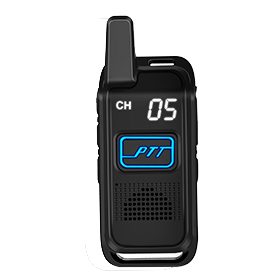
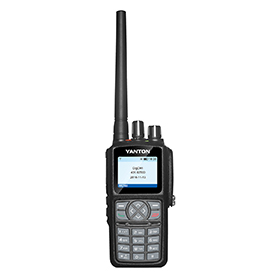
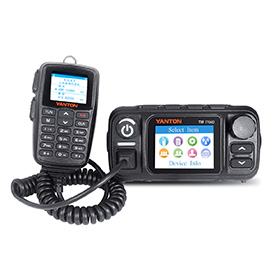

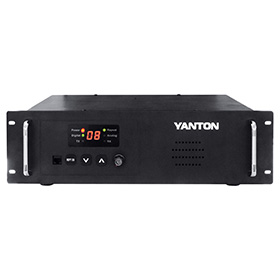
UHF frente a VHF: ¿cuál es la diferencia?
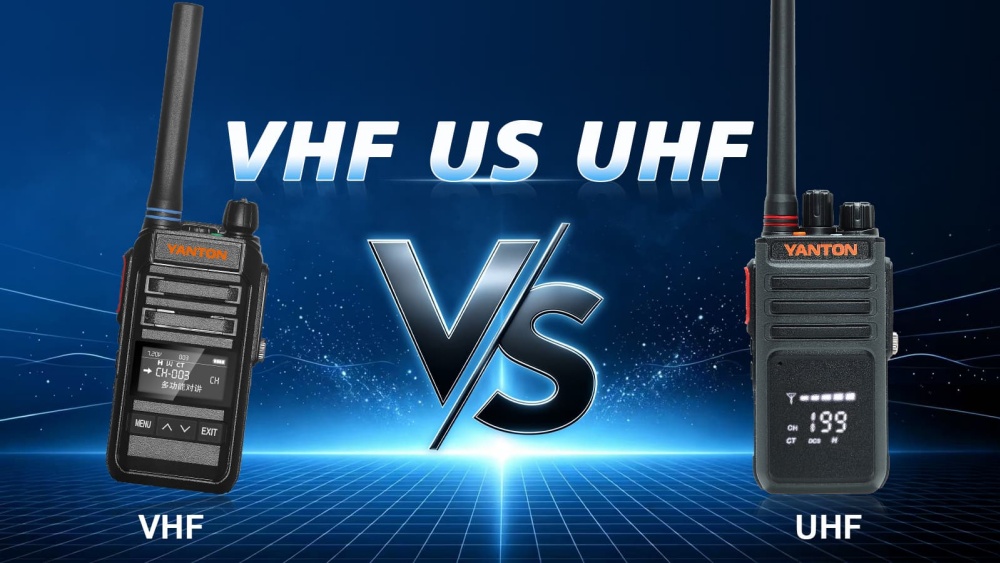
Introducción a las bandas de radiofrecuencia
Las radiofrecuencias se dividen en diferentes bandas, siendo VHF (Muy Alta Frecuencia) y UHF (Ultra Alta Frecuencia) dos de las más utilizadas en radiocomunicaciones. Estas frecuencias son esenciales para una amplia gama de aplicaciones, incluyendo la comunicación personal, los servicios de emergencia, la aviación y el uso comercial.
En términos sencillos, la banda VHF abarca un rango de frecuencias entre 30 MHz y 300 MHz, mientras que la banda UHF se extiende desde 300 MHz hasta 3 GHz. Estas bandas se utilizan para diversos tipos de comunicación, y comprender sus características es fundamental para determinar cuál se adapta mejor a sus necesidades específicas.
VHF vs UHF: Una comparación lado a lado
Analicemos las principales diferencias entre VHF y UHF, centrándonos en aspectos como el alcance, la intensidad de la señal, la penetración, las aplicaciones y mucho más.
1. Alcance y potencia de la señal
Una de las principales diferencias entre las frecuencias VHF y UHF radica en el alcance de comunicación que ofrece cada una. La VHF suele ofrecer una mejor comunicación de largo alcance debido a su menor frecuencia. Dado que las frecuencias más bajas se propagan más lejos, las radiofrecuencias VHF pueden cubrir mayores distancias.
Por otro lado, las frecuencias de radio UHF ofrecen un alcance de comunicación menor. Las señales UHF tienen una frecuencia más alta y pueden atravesar obstáculos como paredes, edificios y árboles. Sin embargo, tienden a perder intensidad de señal a mayor distancia, especialmente en áreas abiertas.
2. Penetración e interferencia
En lo que respecta a las frecuencias de radiocomunicación, uno de los factores más importantes es la capacidad de la señal para atravesar diversas barreras. Esto hace que la UHF sea ideal para entornos donde las señales deben atravesar paredes u otras estructuras, como obras de construcción o entornos urbanos. La VHF, por otro lado, es más susceptible a las interferencias causadas por obstáculos físicos.
3. Aplicaciones de VHF y UHF
Es fundamental comprender para qué se utilizan las frecuencias VHF y UHF para seleccionar la frecuencia de radio adecuada a sus necesidades. Ambas frecuencias cumplen funciones diferentes, y cada aplicación de VHF y UHF destaca en determinadas situaciones.
Aplicaciones VHF:
Comunicación marítima: La VHF se utiliza ampliamente en la comunicación marítima. Dado que los buques suelen operar en vastas zonas de mar abierto, las capacidades de largo alcance de las frecuencias de radio VHF son esenciales para la comunicación entre buques y entre buques y tierra.
Aviación: Los pilotos y el control del tráfico aéreo utilizan principalmente la banda VHF para comunicarse, ya que proporciona excelentes capacidades de largo alcance y una comunicación clara a través del espacio aéreo.
Radioaficionados: Muchos radioaficionados prefieren la banda VHF para la comunicación a larga distancia, especialmente en entornos rurales o en campo abierto.
Aplicaciones UHF:
Seguridad pública: La policía, los bomberos y los servicios de ambulancia suelen utilizar frecuencias de radio UHF porque funcionan bien en zonas urbanas densamente pobladas donde la comunicación necesita atravesar edificios y otros obstáculos.
Obras de construcción: La capacidad de las señales UHF para penetrar obstáculos como paredes y maquinaria pesada las hace ideales para su uso en obras de construcción o en almacenes.
Walkie-talkies: La mayoría de los walkie-talkies y radios bidireccionales de uso doméstico utilizan frecuencias UHF, especialmente en entornos interiores concurridos, para la comunicación de corto alcance.
4. Potencia y eficiencia
Las frecuencias de radio UHF suelen consumir más energía que las frecuencias de radio VHF, lo que puede reducir su eficiencia en algunas aplicaciones. En zonas con menos obstáculos, las radios VHF pueden operar a largas distancias con una potencia relativamente baja, lo que las hace más eficientes energéticamente. Sin embargo, para aplicaciones que requieren penetración a través de materiales densos, las frecuencias UHF suelen ser más eficientes para transmitir señales claras a distancias más cortas.
Ventajas e inconvenientes de VHF y UHF.
Analicemos las ventajas y desventajas de las frecuencias VHF y UHF para que comprenda mejor cuándo usar cada una.
Ventajas de la VHF:
Mayor alcance: Las radios VHF tienen un alcance superior en entornos amplios y abiertos.
Mejor para zonas rurales: La tecnología VHF es ideal para actividades al aire libre, como senderismo u operaciones marítimas, donde hay menos obstáculos que bloqueen la señal.
Menor consumo de energía: Las radios VHF consumen menos energía, lo que las hace más eficientes para un uso prolongado en el campo.
Desventajas de la VHF:
Penetración limitada: Las señales VHF tienen dificultades para penetrar edificios y otras estructuras.
Mayor susceptibilidad a las interferencias: En entornos urbanos densos, las frecuencias VHF pueden sufrir interferencias debido a diversos obstáculos físicos y electrónicos.
Ventajas de la UHF:
Mayor penetración: Las radios UHF son ideales para entornos donde existen obstáculos, como edificios o maquinaria pesada.
Menor distancia con comunicación más nítida: La tecnología UHF ofrece una comunicación más clara a distancias cortas y medias, especialmente en zonas urbanizadas o densamente pobladas.
Común en dispositivos de comunicación personal: Muchos walkie-talkies y radios bidireccionales de uso doméstico utilizan frecuencias UHF debido a su eficiencia en la comunicación local.
Desventajas de la UHF:
Menor alcance: La tecnología UHF tiene un alcance limitado en comparación con la VHF.
Mayor consumo de energía: Las radios UHF tienden a consumir más energía, lo que las hace menos eficientes energéticamente para un uso prolongado.
Siga leyendo, manténgase informado, suscríbase y le invitamos a que nos cuente lo que piensa.
 YANTON Building,Creation Road Tuoxing Industrial,Optoelectronics-information industry base,xiamei town,Nan'an City ,Fujian Province, China. / Room 2105 XM1507 Trend Center 29-31 Cheung , Lee Street Chai Wan,Hongkong
 86-592-5798082
86-595-86767398
86-592-5798082
86-595-86767398
 86-595-86761298


© Derechos de autor: 2026 QUANZHOU YANTON ELECTRONICS CO., LTD. Reservados todos los derechos.

IPv6 network supported


